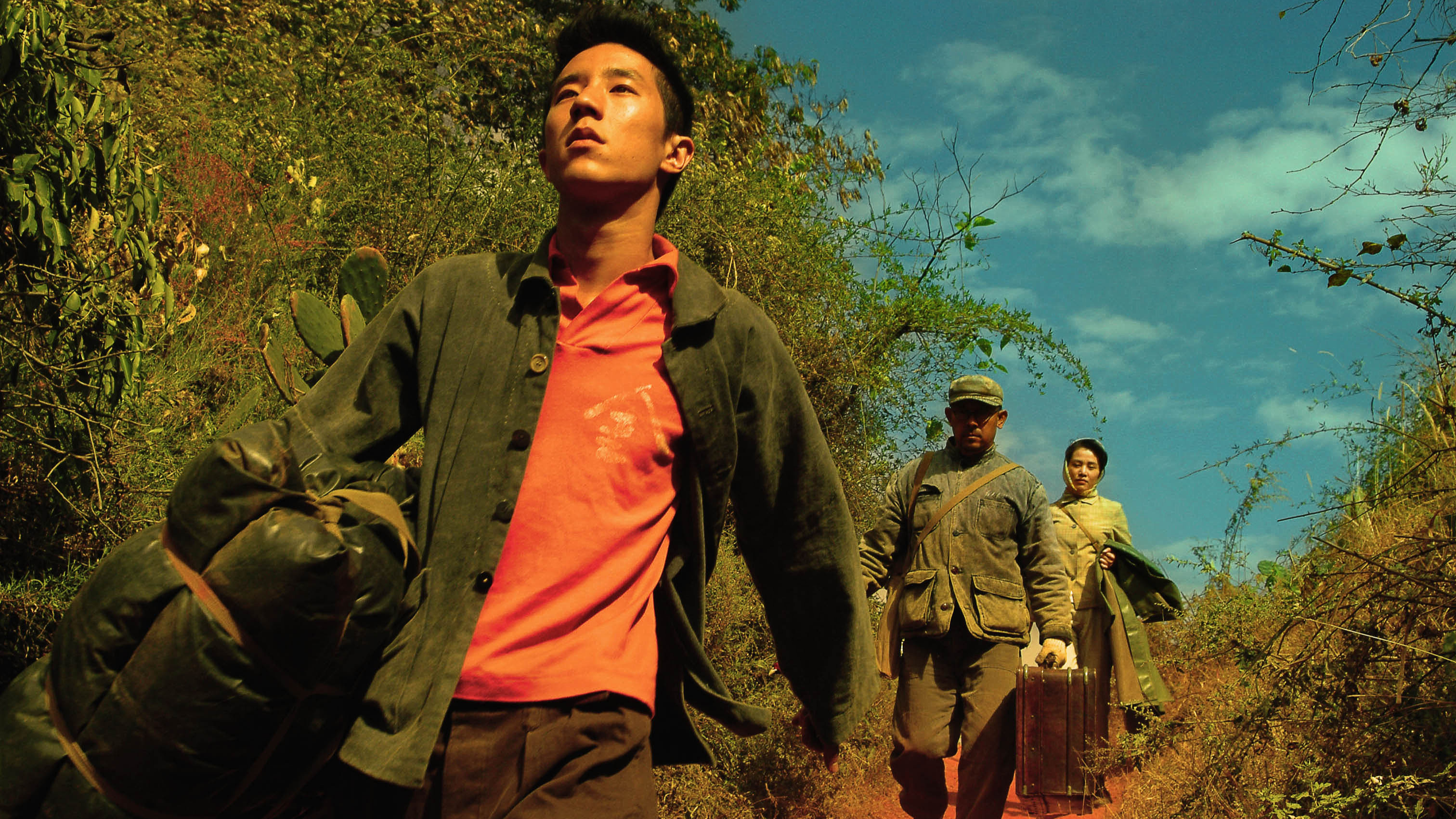
The Sun Also Rises (Film)
Overview
The Sun Also Rises is a Chinese film directed by renowned filmmaker Jiang Wen. This movie marks Jiang's third directorial venture and features a star-studded cast, including Joan Chen, Anthony Wong, and Jaycee Chan. The film is known for its unique narrative structure, presenting four interconnected stories set across different time zones and locations, such as a Yunnan village, a campus, and the Gobi Desert. The film was showcased during the 21st Shanghai International Film Festival, where Jiang also served as the chair of the seven-member jury for the Fiction Competition of the Golden Goblet Awards.
Plot
The narrative of The Sun Also Rises intricately weaves together four stories that, while initially appearing distinct, reveal deep connections as the film progresses. Each story occupies its own unique setting, ranging from a serene village in Yunnan to the bustling environment of a university campus, and finally to the vast, desolate stretches of the Gobi Desert. This non-linear storytelling approach challenges audiences to piece together the narrative threads, resulting in an engaging cinematic experience.
Cast and Characters
The film boasts an impressive ensemble cast. Joan Chen delivers a memorable performance, bringing depth and nuance to her character. Anthony Wong and Jaycee Chan also contribute significantly, each portraying complex characters that add layers to the film’s interwoven stories. The casting is pivotal to the film's success, as each actor brings a unique presence that enhances the film's multifaceted narrative.
Direction and Cinematic Style
Jiang Wen's directorial style in The Sun Also Rises is characterized by its bold visual storytelling and unconventional narrative structure. Jiang, known for his ability to blend visual artistry with compelling storytelling, employs vibrant cinematography and meticulous attention to detail. This film is a testament to his ability to create visually stunning and thought-provoking cinema, reinforcing his reputation as a leading figure in Chinese filmmaking.
Critical Reception
Upon its release in 2007, The Sun Also Rises received critical acclaim for its innovative storytelling and strong performances. Critics have praised Jiang Wen's direction, highlighting his skill in crafting a complex narrative that is both visually captivating and intellectually stimulating. The film's ability to seamlessly connect disparate stories into a cohesive whole has been particularly noted as a testament to Jiang's creative vision.
Film Festival Participation
The Sun Also Rises was prominently featured at the 21st Shanghai International Film Festival, reflecting its significance in the Chinese film industry. Jiang Wen's role as the chair of the jury for the Fiction Competition of the Golden Goblet Awards underscores his esteemed position in the cinematic community. The film's inclusion in the festival highlights its artistic and cultural value, offering audiences a glimpse into Jiang's innovative storytelling techniques.
Cultural Impact
The film's exploration of interconnected stories from different cultural and temporal settings provides a rich tapestry of human experiences. By delving into themes of identity, memory, and the passage of time, "The Sun Also Rises" offers a profound commentary on the human condition. Its cross-cultural narrative underscores the universality of these themes, resonating with audiences both within China and internationally.
Legacy
The Sun Also Rises continues to be celebrated as a significant work in Jiang Wen's filmography. Its innovative narrative structure and visual storytelling have influenced subsequent generations of filmmakers. The film's enduring appeal lies in its ability to challenge conventional storytelling norms, inviting viewers to engage deeply with its intricate plot and rich thematic content.
Article reference1. Jiang Wen shows up at post-screening talk. chinadaily.com.cn. 2018Photo Gallery(3 pictures)CategoriesArtsTagFilm and TVCatalogue1. Overview2. Plot3. Cast and Characters4. Direction and Cinematic Style5. Critical Reception6. Film Festival Participation7. Cultural Impact8. Legacy-
- []








